
Free PSL Face Rating Test Online: Get Your Score in Seconds
Take a free PSL face rating test online. Upload your photo and get an AI-powered facial attractiveness analysis across 8 dimensions — symmetry, harmony, facial structure, skin quality, and more.
Getting your PSL score used to require posting your photo on an internet forum and waiting for strangers to rate you. Now, AI-powered tools can analyze your face across multiple measurable dimensions in seconds — no signup required for a basic test.
This guide explains how online PSL face rating tests work, what they actually measure, and how to get the most accurate result possible.
What Is a PSL Face Rating Test?
A PSL face rating test evaluates your facial attractiveness on the PSL Scale (0–8) using a normal distribution (bell curve). Unlike casual 1-10 ratings where everyone is a 7, the PSL Scale forces a statistical distribution:
- 4 PSL = population average (most people fall here)
- 5–6 PSL = above average to clearly attractive
- 7+ PSL = top ~1%, model-level features
The PSL Scale originated in early internet communities studying facial aesthetics and was later redefined as Proportion, Size, and Lineation — the three geometric principles behind facial attractiveness. For the full background, see What Is PSL? The Facial Attractiveness Rating Scale Explained.
How Online PSL Rating Tests Work
Modern AI-based PSL rating tools analyze your face photo across multiple measurable dimensions. PSL Scale evaluates 8 facial dimensions, each scored 0.0–8.0:
The 8 Evaluation Dimensions
| Dimension | What It Measures | Why It Matters |
|---|---|---|
| Symmetry | Left-right facial balance | Symmetrical faces consistently score higher in cross-cultural attractiveness studies |
| Harmony | How features fit together | Overall balance matters more than any single feature |
| Facial Adiposity | Facial leanness and definition | Lower facial fat reveals better bone structure |
| Skin Quality | Tone evenness, texture, clarity | Clear skin signals health and amplifies bone structure |
| Facial Structure | Jawline, cheekbones, brow ridge | Strong bone structure is a primary attractiveness predictor |
| Averageness | Proximity to population composite | Faces closer to the average composite score higher (developmental stability) |
| Sexual Dimorphism | Gender-typical features | For men: strong jaw, prominent brow. For women: fuller lips, softer jaw |
| Memorable Features | Distinctive positive traits | Features that make a face stand out above average |
How AI Evaluates Your Face
Research published in Orthodontics & Craniofacial Research (Obwegeser et al., 2024) demonstrated that deep convolutional neural networks (CNNs) can produce consistent facial attractiveness scores. The study trained a DenseNet-201 architecture on over 13,000 facial images with more than 17 million human attractiveness ratings from the BLINQ dating platform. Key findings:
- CNN-trained models produced consistent scores across different facial expressions when trained on standardized images
- Scores had significantly lower variance compared to models trained on unconstrained social media images (Levene's test, P < .001)
- Neutral expressions yielded the most reliable scores — smiling, frowning, or other expressions significantly altered the results
This is why PSL rating tools recommend a neutral expression for the most accurate evaluation.
How to Get the Most Accurate PSL Test Result
The quality of your input photo directly affects the accuracy of your PSL score. Based on the findings from Obwegeser et al. (2024) showing that facial expressions and image conditions significantly impact AI scoring:
Photo Requirements
- Use the back camera — selfie cameras use wide-angle lenses that distort facial proportions. The front-facing camera on another phone is better than a selfie
- Natural, even lighting — avoid harsh shadows, direct overhead light, or colored lighting. Overcast daylight or a window-facing room works best
- Neutral expression — research confirms that expressions change attractiveness scores. A relaxed, neutral face gives the most consistent result
- Full face visible — pull hair back, remove glasses, ensure your entire face from hairline to chin is in frame
- Straight-on angle — look directly at the camera. Tilted or angled shots distort facial proportions
Common Mistakes That Skew Results
| Mistake | Effect on Score |
|---|---|
| Selfie (wide-angle lens) | Artificially widens nose, rounds jaw — lowers structure score |
| Smiling | Changes jaw position, cheek shape — affects structure and adiposity readings |
| Poor lighting / shadows | Makes face appear more asymmetrical than it is |
| Tilted head | Distorts symmetry measurement |
| Hair covering features | Prevents accurate evaluation of forehead, jawline, or cheekbones |
Understanding Your PSL Test Results
After taking the test, you receive scores across all 8 dimensions plus an overall PSL score. Here's what each range means:
| Overall Score | Tier | Interpretation |
|---|---|---|
| 0–1.5 | Subhuman | Extremely rare (~1%); severe structural issues |
| 1.5–2.7 | Low-Tier Normie (LTN) | Below average; noticeable weak features |
| 2.8–4.5 | Mid-Tier Normie (MTN) | Average range; no major flaws or standout features |
| 4.6–5.9 | High-Tier Normie (HTN) | Clearly attractive; good symmetry and structure |
| 6.0–6.8 | Chadlite / Stacylite | Top ~5%; model-tier features |
| 6.9–7.4 | Chad / Stacy | Top ~1%; elite facial structure |
| 7.5+ | Adam / Eve | Near-perfect; extremely rare |
For a detailed breakdown of each tier with celebrity examples, see PSL Rating Tiers Explained: From Sub5 to Gigachad.
Dimension-by-Dimension Breakdown
Your test results include individual scores for each dimension:
- High symmetry but low structure? Your features are balanced, but your bone structure (jawline, cheekbones) could be more defined. Body fat reduction often reveals hidden structure.
- High dimorphism but low harmony? You have strong gender-typical features, but they don't work together cohesively. Grooming and styling can help.
- Low skin quality with good structure? Your bone structure is solid, but skin issues are masking it. A consistent skincare routine can make a significant difference.
PSL Rating Tests: AI vs. Human Ratings
A pilot study published in PMC (2025) compared AI-based facial analysis against self-reported attractiveness ratings. The AI tool assessed faces across 7 categories (attractiveness, competence, restedness, happiness, dominance, health, trustworthiness) and found that AI ratings aligned with human consensus on structural facial features.
However, there are important differences:
| Factor | AI Rating | Human Rating |
|---|---|---|
| Consistency | High — same input = same output | Variable — mood, context, familiarity affect judgment |
| Scope | Measures facial geometry only | Includes expression, personality, voice, confidence |
| Speed | Instant | Requires social interaction |
| Bias | Trained on specific datasets | Personal preferences, cultural background |
Key limitation: AI PSL tests measure the structural component of facial appearance. They do not account for expression, personality, voice, confidence, or any of the qualities that matter most in real human connection. A moderate PSL score does not mean moderate overall attractiveness — it means moderate facial geometry.
Free vs. Paid PSL Tests
Several online tools offer PSL or similar facial attractiveness ratings:
| Tool | Free Tier | Method | Dimensions |
|---|---|---|---|
| PSL Scale | Yes | AI-powered multi-modal analysis | 8 dimensions |
| Ugly Rating / Pretty Scale tools | Yes | CNN-based scoring | Varies (1-5) |
| Social media forums | Free | Human crowd-sourced ratings | Subjective |
PSL Scale provides the most detailed free analysis with 8 scored dimensions, individual strengths/weaknesses for each, and actionable improvement suggestions.
Take the Free PSL Face Rating Test
PSL Scale gives you an AI-powered facial attractiveness analysis across 8 dimensions — symmetry, harmony, facial adiposity, skin quality, facial structure, averageness, sexual dimorphism, and memorable features — with a detailed breakdown and personalized improvement recommendations.
Upload a clear, front-facing photo with neutral expression and natural lighting. Results in seconds.
For tips on improving your score, see How to Do PSL Scale — The Complete Guide.
Sources
- PSL Scale — AI-Powered Facial Attractiveness Evaluation
- Obwegeser D, Timofte R, Mayer C, Bornstein MM, Schätzle MA, Patcas R. Scoring facial attractiveness with deep convolutional neural networks: How training on standardized images reduces the bias of facial expressions. Orthodontics & Craniofacial Research. 2024;27(Suppl 2):25-32. doi: 10.1111/ocr.12820
- Google MediaPipe Face Landmarker — outputs 478 3D face landmarks for facial analysis
- Rhodes G. The evolutionary psychology of facial beauty. Psychological Bulletin. 2006;132(4):592-613.
- GQ — Inside the PSL Scale
Author

Categories
More Posts
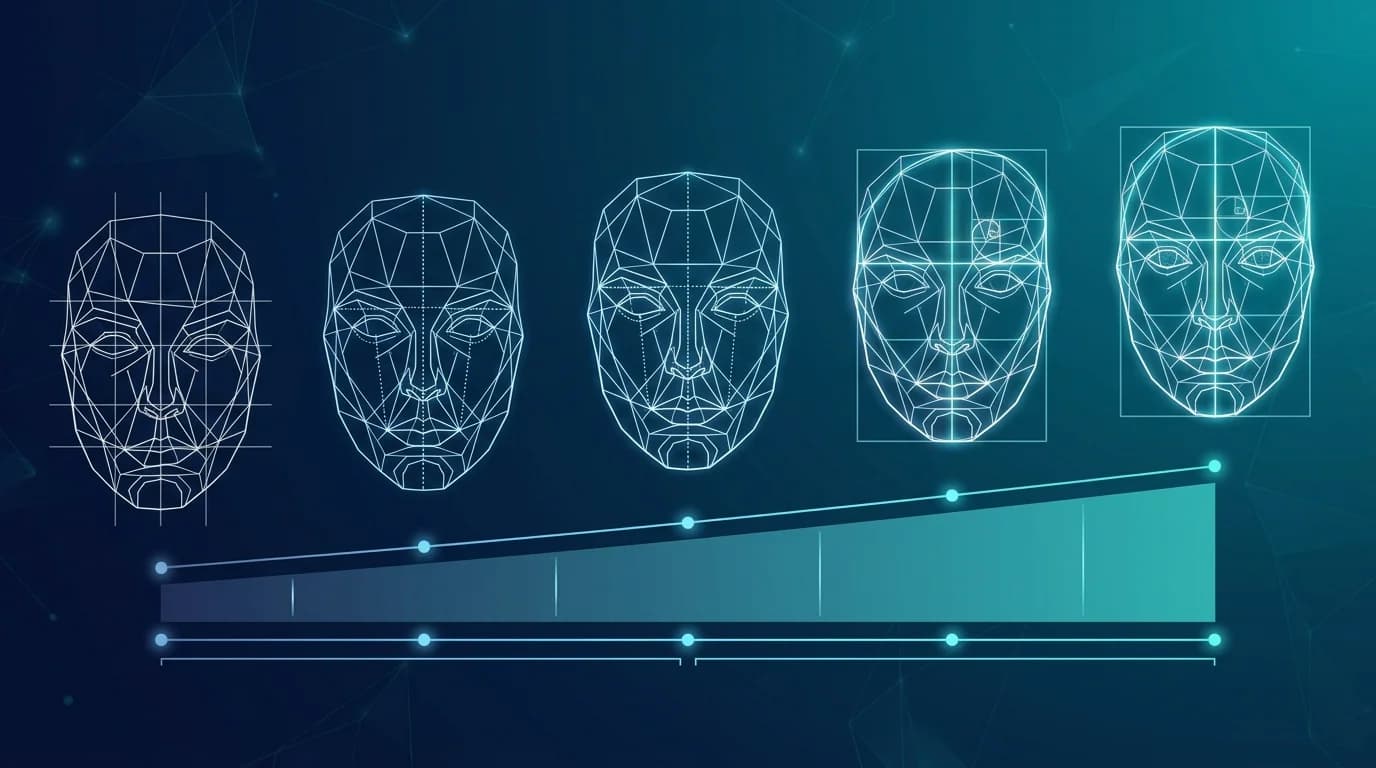
PSL Scale Rating Chart: What Each Score (1–8) Actually Looks Like
Complete PSL Scale rating chart with specific facial metrics for each tier — symmetry %, canthal tilt, FWHR, gonial angle, and facial thirds. See exactly what separates a PSL 4 from a PSL 7.
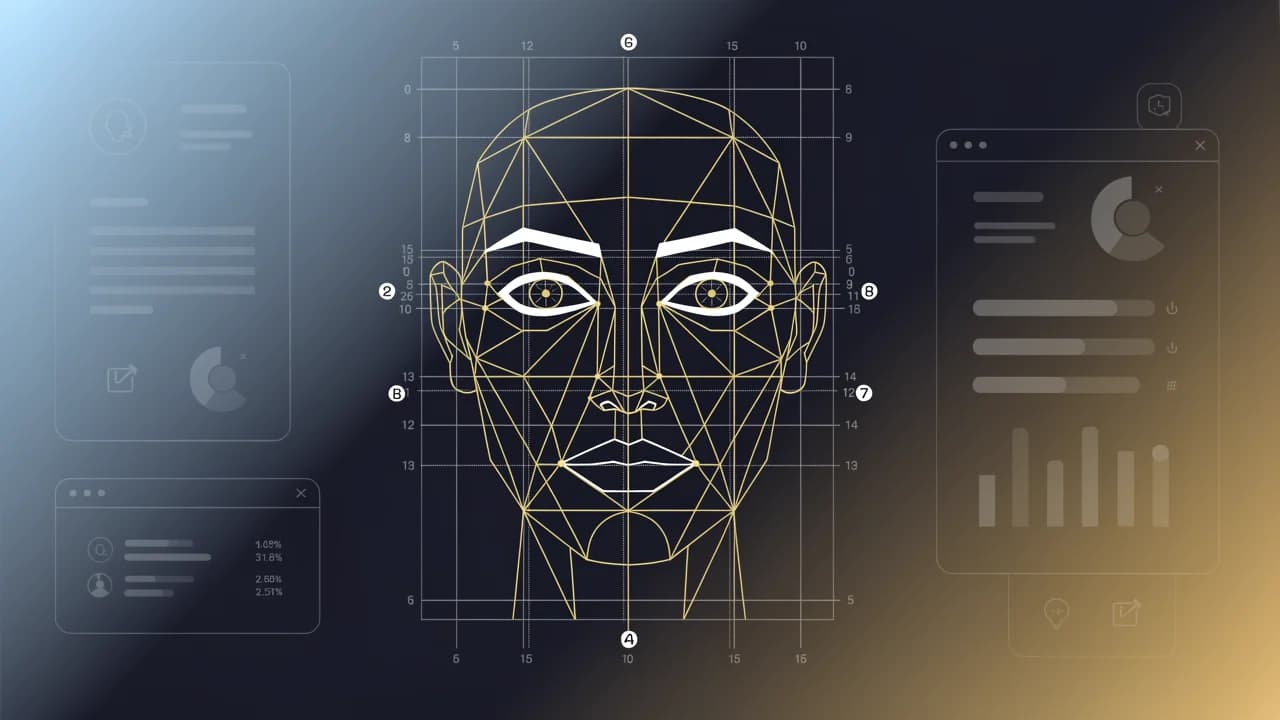
How to Do PSL Scale — The Complete Guide to Understanding and Improving Your Facial Attractiveness Score
Learn what the PSL Scale is, how it works, how to calculate your PSL score accurately, and the science-backed strategies to improve your facial attractiveness score naturally.
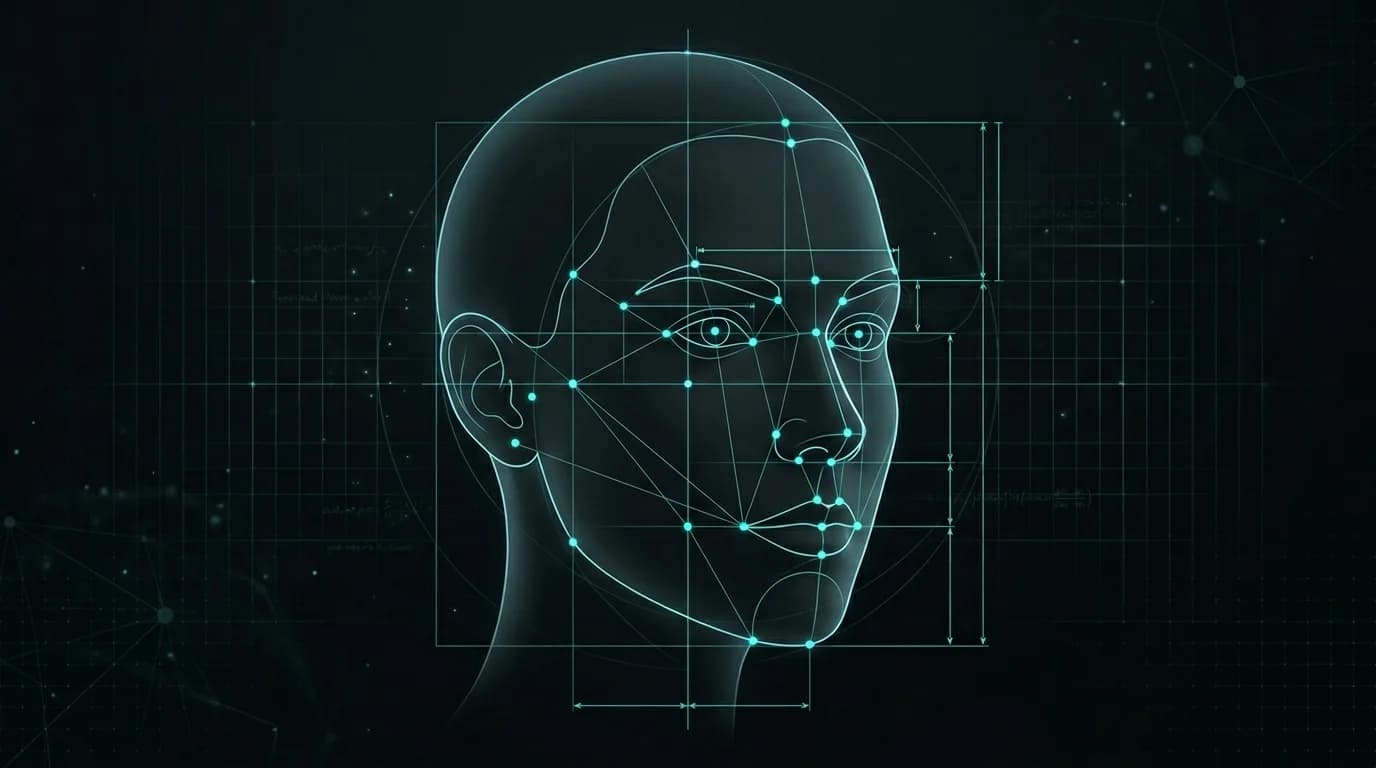
What Is PSL? The Facial Attractiveness Rating Scale Explained
PSL is a 0-to-8 facial attractiveness rating system based on symmetry, proportions, sexual dimorphism, and facial harmony. Learn what PSL means, how the scale works in looksmaxxing, and where you fall on it.